Where You Lose and How the Original Limits That
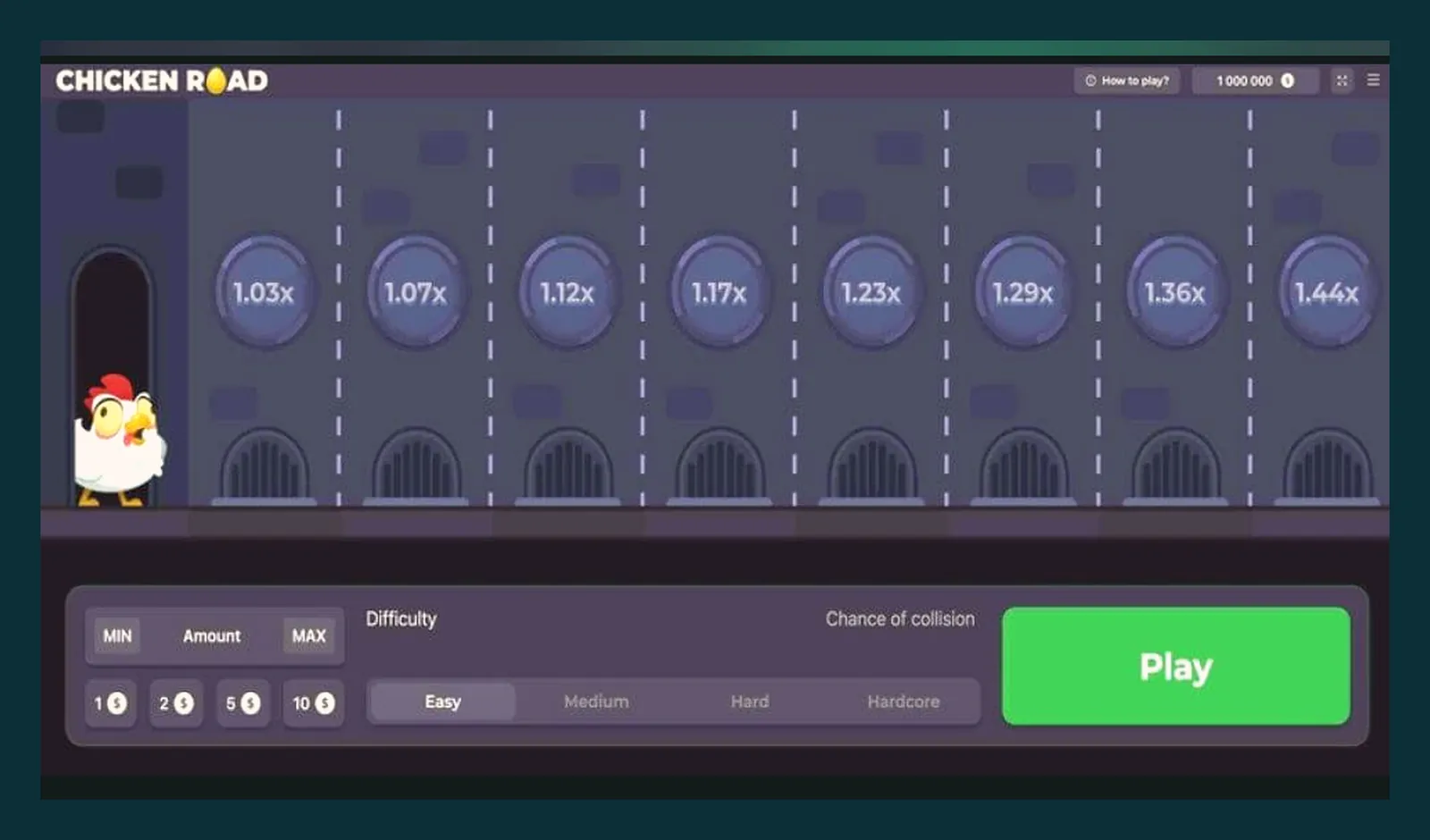
A 5×5 grid sits in front of you. Every tile you flip adds a multiplier. One tile hides the obstacle that ends the round and takes the stake. You decide when to stop — or whether the next flip is the one that wipes the balance.
That tension is the product. Chicken Road 2 was built by a certified provider, tested against a published RTP, and runs under a remote gambling licence. The original sits on UKGC-licensed sites; clones circulate without those protections. This page walks through the certified mechanics, the real numbers from the technical sheet, and the ten-second check that you're playing the original, not a re-skin.
Who Built It and Where the Certification Sits
The original Chicken Road 2 was developed by a provider whose games carry GLI-19 or equivalent testing certificates. The RNG — the algorithm that places the obstacle on the grid — passed third-party lab audits, and the results sit in the provider's compliance documentation. When a UKGC-licensed operator adds the game to its lobby, that operator's remote licence covers it; the licence number lives in the site footer, and you can cross-check it in the UKGC public register.
Unlicensed clones skip that process. They may use the same art and grid layout, but the RNG is untested, the payout percentages are unverified, and there's no regulator to appeal to if something breaks. If the site serving the game doesn't list a UKGC licence number, you're outside the legal framework that applies to UK players.
How a Round Actually Runs from the Player's Seat
You pick a difficulty level — Easy, Medium, or Hard — and place a stake between £0.10 and £5.00. The £5 cap is a UKGC requirement for online slots and comparable games; players aged 18–24 face a £2 cap instead. The grid loads, 25 tiles face-down, and one of them hides the obstacle.
Each tile you flip reveals a safe step and adds to the multiplier. The longer you go, the higher the payout if you cash out. But every flip carries a chance of hitting the obstacle, which ends the round and forfeits the stake. The game doesn't tell you where the obstacle is; the RNG placed it before you started, and the decision to stop or continue is entirely yours.
- Choose difficulty: Easy (fewer obstacles), Medium (balanced), or Hard (higher risk, higher multiplier growth).
- Set your stake within the £0.10–£5.00 range, respecting the age-based cap if you're 18–24.
- Flip tiles one at a time. Each safe tile increases the multiplier.
- Cash out at any point to lock in the current payout, or keep going.
- If you hit the obstacle, the round ends and the stake is lost.
The round length is player-controlled. You can flip one tile and cash out, or push through the grid until only a few tiles remain. The payout grows non-linearly: early tiles add small increments, later tiles multiply faster. That structure rewards risk, but it also means a single bad flip after a long run costs everything.
The Real Numbers from the Technical Sheet
The technical sheet published by the provider lists the certified parameters. These numbers apply to the original game on licensed sites; clones may alter them without disclosure.
The RTP — return to player — is theoretical and assumes optimal cashout timing over millions of rounds. In practice, most players either cash out too early and leave value on the grid, or push too far and hit the obstacle. High volatility means long losing streaks are normal; the max win of 10,000× exists, but reaching it requires flipping nearly every tile without hitting the obstacle, an event with a probability measured in fractions of a per cent.
The stake caps are UKGC rules, not game design. Operators must enforce them by age bracket, and they can't be bypassed by opening multiple accounts — KYC checks and credit-reference checks catch that. Affordability checks kick in from £150 net deposits a month, using Open Banking or credit-reference data at the first stage. If your deposits trigger a review, the operator may ask for proof of income before allowing further play.
The Mechanics One by One: Where Risk Concentrates
Chicken Road 2 has three difficulty levels, each changing the number of obstacles on the grid and the multiplier curve. Easy mode places fewer obstacles, so safe tiles are more common, but the multiplier grows slowly. Hard mode places more obstacles, making each flip riskier, but the payout per safe tile is higher. Medium sits in the middle.
- Easy: more safe tiles, lower multiplier growth, suited to conservative play and smaller stake multiples.
- Medium: balanced risk and reward, the default setting for most players.
- Hard: fewer safe tiles, steeper multiplier curve, higher chance of losing the stake early but bigger payouts if you survive.
The grid is revealed tile by tile, and the obstacle's position is fixed at the start of the round by the RNG. You can't predict it, and past rounds don't influence future placements. Every flip is an independent event. The strategy, if you can call it that, is deciding when the current multiplier is enough to cash out.
The risk concentrates in two places: pushing for one more tile when the multiplier is already high, and playing Hard mode on a small bankroll. A single bad flip wipes the stake, and there's no partial payout. If you're chasing a loss or trying to hit the max win, you're operating outside the probabilities the RTP assumes.
Which Clones Circulate and How They Differ
Clones of Chicken Road 2 appear on unlicensed sites and sometimes on app stores as standalone APKs. They copy the grid layout, the tile-flip mechanic, and the visual style, but the back-end differs. The RNG may not be tested, the RTP may be lower than disclosed, and the max win may be capped below the original's 10,000×. Some clones add features the original doesn't have — auto-cashout at a set multiplier, bonus rounds, or social leaderboards — but those additions don't make them equivalent products.
| Aspect | Original Chicken Road 2 | Typical Clone |
|---|---|---|
| RNG certification | GLI-19 or equivalent lab test | Unverified or undisclosed |
| Operator licence | UKGC remote licence required | Often unlicensed |
| Stake caps | £5.00 (£2.00 for 18–24) | No regulatory cap; may be higher |
| Max win | 10,000× stake | Varies; sometimes lower |
| KYC and age verification | Mandatory before deposit | Often skipped or weak |
| Dispute resolution | UKGC complaints process | None |
The appeal of clones is often faster access — no KYC, no deposit limits, no affordability checks. But that comes with zero recourse if the game malfunctions, the payout doesn't arrive, or the site disappears. For a UK player, the legal framework only covers UKGC-licensed operators. Playing on an unlicensed site means you're outside that protection.
The Ten-Second Check You're on the Original
Open the site footer. Look for a UKGC licence number — it's a requirement for any operator serving UK players. Copy that number and search the UKGC public register; the operator name and licence status should match. If there's no number, or the number doesn't appear in the register, you're on an unlicensed site.
Check the game provider credit, usually shown in the game info panel or the lobby tile. The original Chicken Road 2 credits the certified provider. Clones often omit the provider name or list a different studio. If the provider isn't named, or you can't find third-party mentions of that provider, treat it as a clone.
Look at the stake range. The original respects UKGC caps: £5.00 maximum, £2.00 for players aged 18–24. If the game allows stakes above £5.00 without age or income verification, it's either misconfigured or unlicensed. Licensed operators enforce caps automatically; they can't legally bypass them.
- Footer licence number cross-checks with the UKGC register.
- Game provider credit matches the certified studio.
- Stake caps align with UKGC rules: £5.00 or £2.00 by age.
- KYC was required before you deposited — not optional, not skippable.
If any of those checks fail, you're not on the original. That doesn't mean the clone won't work — it might run fine — but it means the regulatory protections, the tested RNG, and the dispute process don't apply.
FAQ
Who certifies the RNG in Chicken Road 2, and where can I see the report?
The RNG is tested by third-party labs like GLI, iTech Labs, or eCOGRA. The provider holds the certification, and licensed operators reference it in compliance documentation. You won't see the full report as a player, but the UKGC licence requirement means the operator has verified it. If the site has no UKGC licence, there's no requirement to use a certified RNG.
What's the actual RTP, and does it change by difficulty level?
The RTP varies by difficulty and cashout strategy. Easy mode has a higher floor RTP because fewer obstacles mean more safe tiles, but the multiplier ceiling is lower. Hard mode offers higher peak RTP if you survive deep into the grid, but the risk of hitting an obstacle early is greater. The provider publishes an RTP range; optimal play over millions of rounds approaches the upper bound, but most players don't play optimally.
Can I play Chicken Road 2 in demo mode without depositing?
Many UKGC-licensed sites offer demo play, but UK advertising rules require age verification before showing gambling content. That means demo mode is usually only available after you log in and pass KYC, even though no deposit is required. Some operators skip demo for crash-style games entirely. If a site offers unrestricted demo play with no age check, it's likely unlicensed.
Why is my first withdrawal taking 48 hours when e-wallets are meant to be faster?
The first withdrawal always takes longer because the operator verifies your documents — proof of ID, proof of address, sometimes proof of payment method. That process can take 24–48 hours. Once verified, e-wallet withdrawals typically process in a few hours, and Faster Payments to your bank usually arrive the same day or within two working days. Subsequent withdrawals are quicker unless your play pattern triggers a fresh affordability check.
If I hit the max win of 10,000× on a £5 stake, do I pay tax on the £50,000?
No. Gambling winnings are tax-free for UK players. The operator pays Remote Gaming Duty — currently 40 per cent of gross gaming revenue, raised in April 2026 — but that's on the operator's side, not yours. You receive the full £50,000, though the operator will verify your identity and source of funds before processing a withdrawal that large, as required by anti-money-laundering rules.
How do I know if I'm playing too much, and what's GAMSTOP?
GAMSTOP is the UK's national self-exclusion scheme. One registration blocks every UKGC-licensed site for six months to five years. If you're finding it hard to stop, or deposits are affecting your finances, GAMSTOP is the hard boundary. Operators also offer deposit limits, session reminders, and reality checks in account settings. Affordability checks start from £150 net deposits a month, so if your play crosses that threshold, expect the operator to ask questions. BeGambleAware provides free support and guidance; the number is on every licensed site.