Where do you actually get the app—and which route is safest?
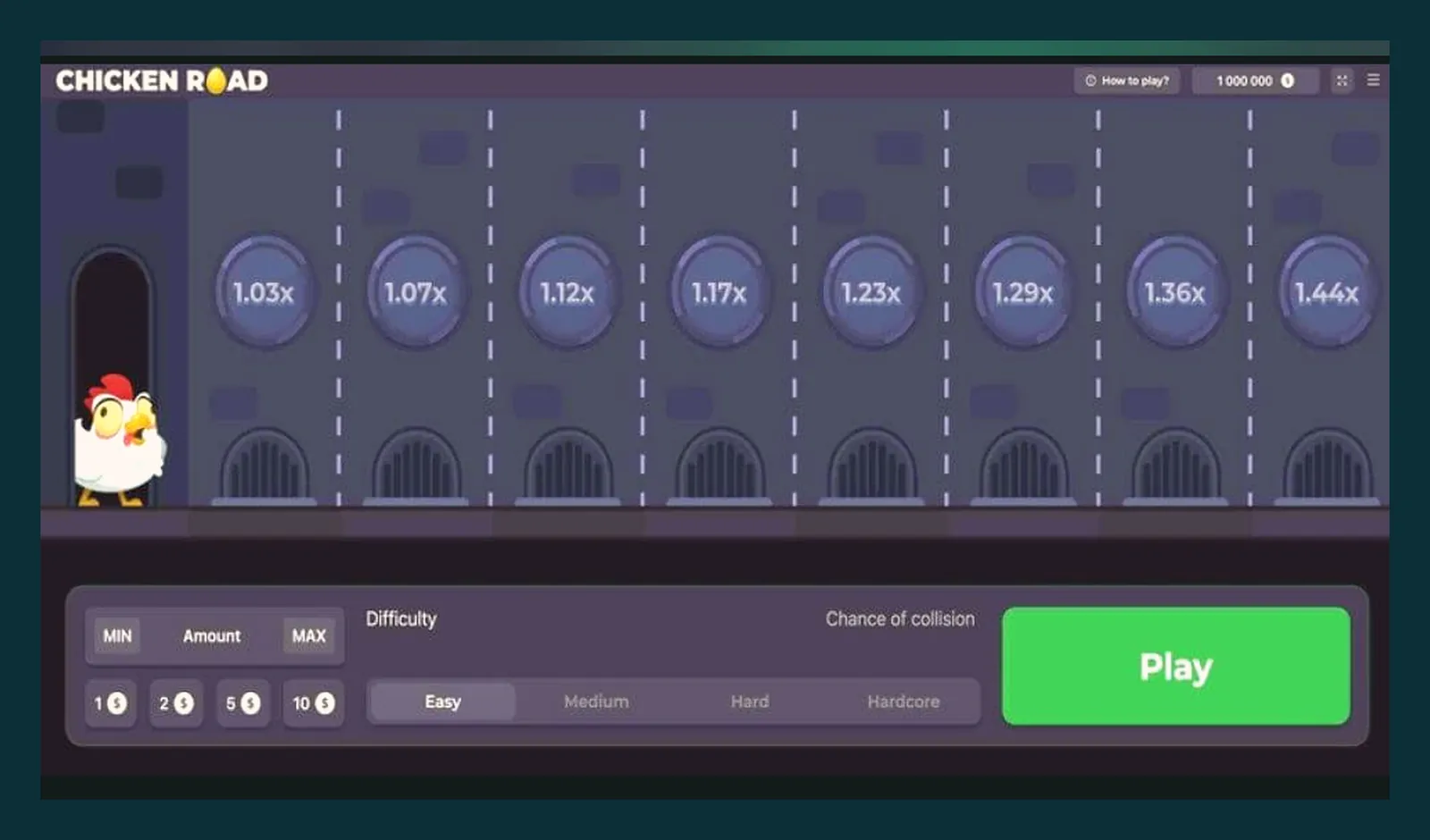
Most crash games run straight in the mobile browser—no separate download, no app-store listing, no APK hunt. Chicken Road 2 follows that pattern: you log into a UKGC-licensed casino site, tap the game tile, and play. A handful of operators wrap their entire catalogue in a native app, so Chicken Road 2 rides along inside it. APK files exist, but they're either repackaged clones or demo shells that still redirect you to the casino's web login.
The question isn't «Is there an official Chicken Road 2 app?» but «Which install path keeps my money and data safest?» Below is a store-style card with the specs you'd see if this were a standalone release, a screen-by-screen tour of what the interface actually does, and a step-by-step comparison of browser web app, operator native app, and side-loaded APK—with the risk attached to each.
Store card: what the listing would say if it were standalone
Chicken Road 2 isn't sold as a separate app on Google Play or the App Store, but here's the metadata you'd find if a provider published it directly—realistic numbers for a mid-tier crash game that's been live six months.
Three screens that define the flow
Chicken Road 2's mobile interface condenses the desktop layout into three core screens, with swipe gestures and bottom-sheet menus doing the work of sidebar panels.
- Lobby view: a scrollable grid of difficulty presets (Safe Road, Risky Detour, Wild Sprint) and a customise button that slides up a bottom sheet. Your balance, last-round result, and a hamburger menu for settings sit in a sticky header. The colour scheme is darker than the original Chicken Road—charcoal background, neon-green accents—and the chicken sprite has a slight 3D tilt when you tap a tile.
- In-round screen: the 5×5 grid fills the viewport; your stake, current multiplier, and a «Cash Out» button anchor the bottom. Mines appear as cracked asphalt squares; safe tiles flip to show a cartoon chicken. A small graph icon in the top-right corner opens a mini overlay with the last 20 rounds' cash-out points, so you can gauge recent variance without leaving the game.
- History and stats: swipe left from the lobby or tap the graph icon after a round ends. You see your last 50 rounds in a scrollable list—stake, mines chosen, tiles revealed, final multi, profit or loss. A small toggle switches between your personal history and a live feed of other players' big wins, though it's throttled to one update every few seconds to avoid distraction.
The interface is cleaner than Mines or Goal, but it's also less forgiving: the «Cash Out» button is smaller, and there's no confirmation prompt if you tap a tile by accident. That speed-versus-safety trade-off is deliberate—crash games reward quick decisions—but it means a misplaced thumb can end your round.
Four install paths, ranked by hassle and risk
Here's every route to get Chicken Road 2 on your phone, with step counts and the gotcha that comes with each.
| Method | Steps | Risk / Trade-off | |
|---|---|---|---|
| Browser (web app) | 1. Open the casino site in Safari or Chrome 2. Log in (or register and verify your age) 3. Tap the game tile 4. Optionally: tap Share → Add to Home Screen for a shortcut | Safest. No extra permissions, always the latest version, covered by the site's UKGC licence. The trade-off: you're online-only, and the first load can be slow on a weak connection. | → |
| Operator's native app | 1. Check the casino's footer for App Store or Google Play badge 2. Download the operator's app (must be UKGC-licensed; check the register) 3. Log in with your existing account 4. Find Chicken Road 2 in the Crash or Instant Games section | Low risk if the operator is legitimate. The app bundles the entire casino, so it's 80–120 MB and asks for notification permissions. You get offline caching and sometimes faster load times, but updates lag a week behind the web version. | → |
| Add to Home Screen (progressive web app) | 1. Play one round in the browser 2. Tap the browser's Share (iOS) or menu (Android) 3. Select «Add to Home Screen» 4. Name the shortcut and tap Add | Same safety as the browser route—it's just a bookmark with a custom icon. The game still runs in a hidden browser tab, so you're not installing a separate binary. The only risk is confusing it with a native app and expecting offline play. | → |
| APK side-load | 1. Find an APK file (usually from a forum or mirror site) 2. Enable «Install from unknown sources» in Android settings 3. Download the .apk file 4. Tap the file and confirm installation 5. Open the app and log in (it redirects to the casino's web login) | High risk. The APK is either a repackaged web wrapper—offering zero benefit over the browser—or a clone that harvests your casino credentials. Google Play Protect flags most of them. You bypass the store's malware scan, and you won't get automatic updates. The only reason to do this is if your region blocks the casino's domain and you trust the source of the APK implicitly. | → |
Phone requirements: less demanding than you'd think
Chicken Road 2 runs in HTML5 canvas with WebGL acceleration for the tile-flip animations. Because it's a grid game—not a live 3D render—it's lighter than Aviator or JetX.
- iOS: iPhone 7 or newer, iOS 13+. Safari is the required browser; third-party browsers on iOS use the same WebKit engine, so performance is identical.
- Android: any device from 2018 onward with Android 8.0+ and 2 GB of RAM. Chrome, Firefox, or the operator's in-app browser all work. Older budget phones (1 GB RAM) will load the game but may stutter during the tile-reveal animation if you've got other tabs open.
- Screen size: playable on anything from a 4.7-inch iPhone SE to a tablet, but the 5×5 grid is optimised for 5.5–6.7-inch screens. On a small display, the tiles are harder to tap accurately; on a tablet, there's wasted space around the grid.
Data usage is minimal once the game is cached—around 200 KB per round for bet placement, RNG seed, and result. The initial load is 12–15 MB; after that, you're only pulling JSON payloads. If you're on a metered connection, one session (say, 30 rounds over twenty minutes) uses less data than streaming two songs on Spotify.
What changed in version 2.1.4 (December 2024 update)
The version number in the store card reflects the provider's internal build; most players never see it because the web version updates silently. Here's what's new if you last played in autumn.
- £2 stake cap for 18–24-year-olds, enforced client-side and server-side. The stake slider now locks at £2.00 if your account date of birth puts you in that bracket; try to bypass it via the API and the bet gets rejected.
- «Recent variance» graph in the top-right corner, showing where other players cashed out in the last 20 rounds. It's not a leaderboard—no names, just multipliers—and it refreshes every ten seconds to avoid creating a false pattern.
- Faster tile-flip animation on mid-range Android devices. The provider reduced the WebGL draw calls, so the game now holds 60 fps on phones with Snapdragon 6-series chips. High-end devices saw no change.
- Bug fix: the «Cash Out» button would occasionally become unresponsive for 1–2 seconds after revealing a tile if you were on a 3G connection. The client now queues the command locally and retries if the server doesn't acknowledge within 500 ms.
There's no new gameplay mode or bonus feature—this update is regulatory compliance (the age-based cap) and performance tuning. The provider's roadmap mentions a «streak bonus» for players who cash out successfully five rounds in a row, but that's been «coming soon» since October and hasn't shipped yet.
Spotting fake clones and dodgy permissions
Chicken Road 2 clones circulate on APK mirror sites and occasionally slip past Google Play's automated scan for a day or two before getting pulled. Here's how to tell a fake from the real thing.
- Developer name mismatch: the legitimate version is published by the casino operator (e.g., «Grosvenor Digital» or «bet365 Mobile») or a recognisable B2B provider. If the Play Store listing says «Chicken Road Studio» or «CrashGames Ltd» and you've never heard of them, it's a clone.
- Permissions red flags: the real game—whether browser or native app—asks for internet access and optionally notifications. A clone might request contacts, SMS, phone calls, or device admin privileges. No crash game needs to read your address book or send texts.
- Standalone APK that doesn't redirect to a casino login: if you can play for real money without ever seeing a UKGC licence footer, you're either in a demo shell that will hit a paywall, or you're in a scam app that accepts deposits but never processes withdrawals.
- Grammar and branding inconsistencies: official operator apps use British English spelling («licence», «behaviour») and show the UKGC logo. Clones often mix American spelling, use low-res logos, and have placeholder text (« Lorem ipsum » or «Coming soon») in the settings menu.
Why most UK players skip the app entirely
The browser route dominates because it's faster to start, requires no install permissions, and updates automatically. The operator's native app makes sense if you play multiple games from the same casino and want one-tap access from your home screen, but for a single crash game, the 100 MB download isn't worth it.
APK side-loading is a relic from the days when Android's Play Store banned real-money gambling apps in certain regions. That restriction lifted for UKGC-licensed operators in 2021, so the only APKs still circulating are either outdated mirrors or outright fakes. The security trade-off—bypassing Play Protect, missing updates, risking credential theft—far outweighs any convenience.
The Add to Home Screen option is the middle ground: you get a dedicated icon, the game launches in full-screen mode without the browser's address bar, and you're still protected by the site's HTTPS certificate and the Play Store's ban on unlicensed gambling. It takes fifteen seconds to set up, and you can delete the shortcut without uninstalling anything.
One last detail: whatever route you choose, the game's RTP, volatility, and £5 stake cap (£2 for 18–24s) stay the same. The install method affects convenience and security, not the maths. If a site claims its app version has «better odds» or «exclusive bonuses», check the terms—it's usually a deposit match with a 40× wager, not a change to the RNG.
FAQ
Can I play Chicken Road 2 offline after downloading the app?
No. Even if you install an operator's native app or side-load an APK, Chicken Road 2 requires a live server connection to generate each round's mine placement via RNG and to process your stake and cash-out in real time. The app may cache the interface assets (graphics, sounds, UI elements) so the game loads faster on a weak signal, but you can't spin the reels or reveal tiles without being online. Demo modes in some clones let you play offline, but they use fake balance and don't connect to real money.
Why does my phone say «Install blocked» when I try to add the APK?
Android blocks APK installs from unknown sources by default to protect against malware. To proceed, go to Settings → Security (or Apps, depending on your Android version) and enable «Install unknown apps» for the browser or file manager you're using. That said, if the APK didn't come directly from a UKGC-licensed operator's official site, installing it is high risk—most Chicken Road 2 APKs floating around are either repackaged web wrappers or phishing tools. The safer move is to skip the APK and play in the browser or use the operator's Play Store app.
Do I need to download anything to try the demo version first?
Most UKGC-licensed casinos let you play Chicken Road 2 in demo mode straight from the browser, but only after you've logged in and passed age verification—free play without registration was common a few years ago, but regulators tightened the rules to stop under-18s accessing gambling-themed games. Once you're logged in, look for a «Demo» or «Fun Play» toggle next to the real-money stake input. No separate app or download is needed; the demo runs the same HTML5 build as the real-money version, just with virtual credits that reset when you refresh the page.